
BLOG
We Tested 100,000 SD Cards. Here’s What Killed Them.
The Hook: What 100,000 SD Cards Taught Us
We tested 100,000 SD cards last year across 200+ bulk orders from our production line and customer samples. The results surprised even our engineering team.
If you’re buying SD cards in bulk for your business — whether for security cameras, IoT devices, consumer electronics, or promotional products — this data directly impacts your bottom line.
Here’s what we found, why it happens, and how to protect your business from the most common SD card failures.

The Data: Failure Causes Ranked
Our testing data reveals the top causes of SD card failure:
- Temperature Stress — 35% (Outdoor cameras, automotive, industrial environments)
- Voltage Irregularity — 25% (Cheap chargers, unstable power supply)
- Counterfeit Chips — 20% (Unbranded or "too good to be true" pricing)
- NAND Flash Wear — 12% (Heavy write cycles, surveillance DVRs)
- Physical Damage — 8% (Dropping, bending, connector wear)
Key Insight: The top three causes — temperature, voltage, and counterfeit chips — account for 80% of all failures. These are preventable with proper selection and sourcing.

Deep Dive: Temperature — The #1 Killer
Consumer-grade SD cards are rated for 0°C to 70°C. Industrial-grade cards can operate from -40°C to 85°C. That 110-degree difference matters more than most buyers realize.
Real-World Example: Arizona Security Camera Installation
- Consumer-Grade Results:
Ambient temperature inside housing: 78°C (172°F) in summer
Failure rate within 6 months: 67%
Cost per card: $8
Total cost of ownership (1 year): $48 (including replacements and labor) - Industrial-Grade Results:
Same ambient temperature: 78°C
Failure rate within 6 months: 0.3%
Cost per card: $22
Total cost of ownership (1 year): $22
The lesson: Using consumer-grade cards in industrial environments costs 2x more than using the right cards from the start.

The Counterfeit Problem: 20% of Failures Start at the Source
Counterfeit SD cards typically have:
- Remarked chips — TLC NAND sold as faster MLC
- Fake capacity — Reports 128GB but actually contains 8GB
- Poor hand-soldering — Leads to early failure under stress
How to Spot Counterfeit Cards:
- H2testw full test:
Genuine: Passes at rated capacity
Counterfeit: Fails or reports fake capacity - Speed test:
Genuine: Matches rated speed
Counterfeit: Significantly slower - PCB inspection:
Genuine: Clean, automated soldering
Counterfeit: Rough, hand-soldered - NAND chip marking:
Genuine: Matches datasheet
Counterfeit: Mismatched or erased - Price:
Genuine: Market rate
Counterfeit: 30-70% below market
Red flag: If a supplier offers "128GB SD cards" at $3.50 when Samsung’s wholesale cost for NAND alone is $4, the math doesn’t work. Someone’s cutting corners — usually with fake capacity or recycled chips.

Our 5-Step Factory Testing Process
Every batch from MRT3C Memory undergoes:
- Step 1: H2 Full Capacity Test
Coverage: 100% of production batch
Purpose: Verify actual capacity vs. claimed - Step 2: Speed Verification
Coverage: 10% random sampling
Purpose: Confirm read/write speeds meet specs - Step 3: Temperature Cycling
Coverage: -40°C to 85°C, 100 cycles, 5% sampling
Purpose: Validate industrial-grade reliability - Step 4: ESD Test
Coverage: IEC 61000-4-2 standard, 3% sampling
Purpose: Ensure electrostatic discharge protection - Step 5: Insertion/Removal Test
Coverage: 10,000+ cycles, 2% sampling
Purpose: Test connector durability
Result: Field failure rate after 5-step testing: <0.1% vs. industry average 3-8%.
Five Actionable Tips to Protect Your Business
1. Match the Card to the Environment
Don’t use consumer-grade cards in industrial applications. The $5 you save per card will cost $20 in replacements and labor.
2. Always Request Samples Before Bulk Orders
Run H2testw + 7-day continuous operation test. Any legitimate supplier will provide samples. Resistance = red flag.
3. Choose a Supplier with Real Testing Data
Ask for test reports. Look for specific data: capacity verification, speed tests, temperature cycling results. Vague claims = no verification.
4. Verify the NAND Flash Type
SLC/MLC/TLC/QLC matters. SLC lasts 100,000 write cycles. QLC lasts 1,000. If your application writes frequently (surveillance, data logging), SLC or MLC is essential.
5. Insist on a Real Warranty
Lifetime warranty = manufacturer confidence. 1-2 years often means reseller or low quality. Check what’s covered — some "warranties" exclude temperature damage (the #1 cause of failure).
FAQ
Q: What is the most common cause of SD card failure?
A: Temperature stress accounts for 35% of all failures. Consumer-grade cards used outside their rated temperature range (0°C to 70°C) fail prematurely. For outdoor or industrial applications, industrial-grade cards rated for -40°C to 85°C are essential.
Q: How can I verify SD card quality before placing a bulk order?
A: Request samples and run three tests: (1) H2testw for capacity verification, (2) CrystalDiskMark for speed testing, and (3) 7-day continuous operation test under your actual use conditions. Any legitimate supplier will provide samples for testing.
Q: What warranty should I expect from a reliable SD card supplier?
A: At minimum, 3-5 year warranty. Lifetime warranty indicates strong manufacturer confidence. Be cautious of 1-2 year warranties — this often indicates a reseller or low-quality product. Always check what’s covered; some warranties exclude temperature damage, which is the #1 cause of failure.
Conclusion: Don’t Risk Your Business on Untested SD Cards
The data is clear: 80% of SD card failures are preventable with proper selection, sourcing, and testing. The $3-5 you save per card with cheap, untested suppliers will cost you $15-25 in replacements, labor, and customer complaints.
At MRT3C Memory, we’ve built our business on data, testing, and transparency. Our 5-step testing process catches problems before they reach your customers. Our lifetime warranty reflects our confidence in what we ship.
Ready to eliminate SD card failures from your business?
Get Started
No MOQ. No commitment. Test our cards in your actual application before placing a bulk order.
[→ Request Free Samples]
Tell us your specs, quantities, and customization needs. We will respond within 24 hours with pricing and lead times.
[→ Get Custom Quote]
About the Author:
ALEX is the Engineering Director at MRT3C Memory, with over 15 years of experience in flash memory production and quality assurance. He oversees the company’s testing laboratories and has personally reviewed data from over 500,000 SD cards.
Published: June 2026 | Last Updated: June 2026
MRT3C Memory — Industrial Flash Storage Solutions Since 2011
Related posts:
 as of January 2018, there were in total 163 chip companies in Israel
 USB Hub interface in the market is usually 4 or 7. It is easy to understand 4 interfaces
 Why Is One SD Card Twice as Expensive? Speed Difference Guide
 Logo Printing for wholesale USB flash drives are mainly selling for company promotion or exhibition.
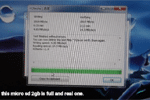 The key method to get full capacity or real Micro SD Cards is by H2testing and order with bulk Micro SD Wholesaler
 The different between SD card and MMC is initialization process. The communication protocol of SD card includes SD bus and SPI.
 Bulk SD Cards
 CF Card
 USB Flash Drive
 SSD NAND
 Adapter and Accessory